
The surprising truth about why leaves change color in the fall
The yellow and orange in a fall leaf were there all summer. That is the surprising part of autumn color: the season does not paint most leaves from scratch, it unmasks them. The Smithsonian explains that most of the year, leaves on deciduous trees are a rich green because of the chlorophyll they use to […]
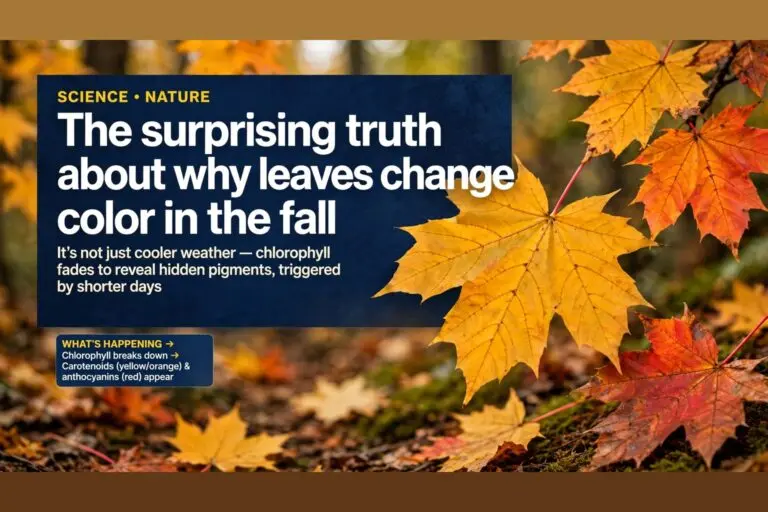
The yellow and orange in a fall leaf were there all summer. That is the surprising part of autumn color: the season does not paint most leaves from scratch, it unmasks them. The Smithsonian explains that most of the year, leaves on deciduous trees are a rich green because of the chlorophyll they use to absorb energy from sunlight during photosynthesis, converting that energy into sugars to feed the tree. The yellow and orange pigments are already in the leaves at that point, just masked during the warmer months.
Green is a working color
Trees that change color and drop their leaves are deciduous, and they usually have large, broad leaves. Evergreen trees with needles, which stay green to continue photosynthesis through the winter, are coniferous. The U.S. Forest Service puts the palette plainly: chlorophyll gives leaves a basic green color and is necessary for photosynthesis, the chemical reaction that enables plants to use sunlight to manufacture sugars for food. As long as the tree is actively feeding itself, green wins.
Shorter days break the mask
As the season changes, temperatures drop and days get shorter. Trees get less direct sunlight, and the chlorophyll in the leaves breaks down. The Forest Service describes the same trigger from the night side: as night length increases in autumn, chlorophyll production slows down and is eventually destroyed, and the carotenoids and anthocyanin present in the leaf are then unmasked and begin to show their colors. Carotenoids produce the yellow, orange, and brown colors also seen in corn, carrots, and daffodils.
Red is the exception: it is made fresh
Darker red leaves work differently. The Smithsonian says they are the result of a chemical change: sugars that can get trapped in the leaves produce new pigments, called anthocyanins, that were not part of the leaf in the growing season. Anthocyanins give color to cranberries, red apples, concord grapes, blueberries, cherries, strawberries, and plums, and they are water soluble and appear in the watery liquid of leaf cells. Some trees, like oaks and dogwoods, are likely to produce red leaves.
Why one hillside shows five colors
Species set the starting palette. The Forest Service lists oaks as red, brown, or russet, hickories as golden bronze, aspen and yellow poplar as golden yellow, dogwood as purplish red, and beech as light tan. Maples differ species by species: red maple turns brilliant scarlet, sugar maple orange-red, black maple glowing yellow, and striped maple almost colorless. Weather then tunes the result: the Smithsonian notes that how much and how fast leaves transform varies by location, and the best colors are produced when the weather is dry, sunny, and cool, while places that are cloudy, damp, or warm will not see the same degree of change.
Then the tree seals the leaf off
Color is only the middle of the story. Trees start building a protective seal between leaves and their branches as the weather turns, and they take in as many nutrients as possible from the leaves, because leaves would not survive the winter and would make trees vulnerable to damage if they remained. When the leaves are cut off from the fluid in the branches, they separate and drop to the ground. The fall display, in other words, is a tree closing down a food factory in an orderly way, and the colors are what its chemistry looks like on the way out.
Sources
- U.S. Forest Service: The Joy and Science of Fall Colors
- Smithsonian Institution: Why Do Leaves Change Color in the Fall?