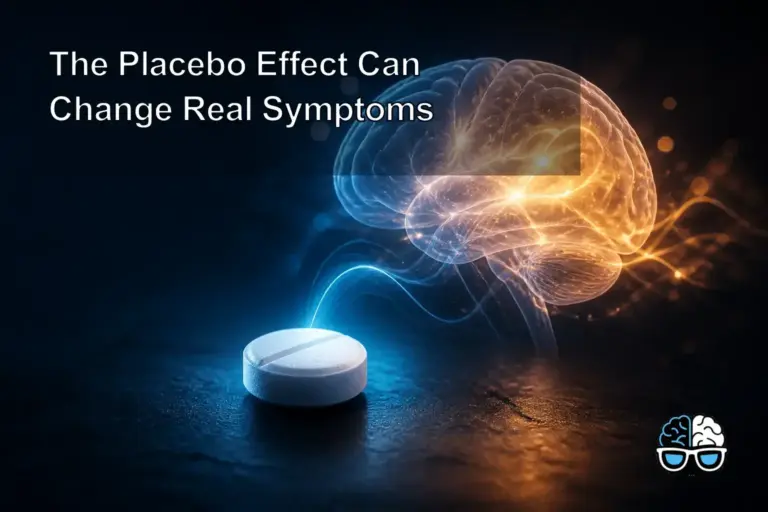
The Placebo Effect Can Change Real Symptoms
Learn how placebos, despite having no active drug, can ease symptoms via expectation, conditioning, and brain pathways, affecting pain, mood, and bodily functions.
Overview
Placebo refers to a treatment that looks like a real medication or procedure but contains no active pharmaceutical ingredient. Common examples include sugar‑pill tablets, saline injections, and sham surgeries. In clinical research, placebos are given to a control group so that any change observed in that group is called the placebo response. The placebo effect is defined as the difference between that response and the change seen when no treatment is given at all.
This indistinguishability shields participants from knowing which group they are in, preventing expectations of efficacy from influencing the outcome.
Background
Discussions of a placebo effect date back to the 18th century in psychology, but the concept gained prominence during the twentieth century as researchers began to quantify its influence. Ethical questions arise when a placebo is presented as an active drug, because this involves deception and can undermine informed consent. Surveys show that a majority of physicians have used placebos in practice, while a small minority advocate a strict prohibition.
The debate extends to homeopathy, which some authorities label a placebo treatment and argue should be governed by explicit prescribing policies. In the United Kingdom, a House of Commons Science and Technology Committee concluded that homeopathy acts as a placebo and urged the government to develop a clear stance on prescribing such interventions. Similar discussions appear in other countries where regulators weigh patient autonomy against the risk of misleading claims.
Discussions about placebo-controlled trials have influenced revisions to the Declaration of Helsinki.
Key details
Psychological explanations focus on expectancy and learning. Irving Kirsch’s 1985 expectancy theory proposes that believing one will feel different leads to actual subjective changes, a self‑fulfilling expectation. Classical conditioning contributes when a neutral stimulus is repeatedly paired with an active drug; eventually the neutral stimulus alone can trigger the drug’s effect. Motivation also shapes the experience, as personal goals alter how symptoms are noticed and how coping behaviors are chosen.
Neuroimaging studies of placebo analgesia reveal activation in a network of frontal and limbic structures. Increased activity and functional connectivity have been observed in the anterior cingulate, prefrontal, orbitofrontal and insular cortices, nucleus accumbens, amygdala, the brainstem’s periaqueductal gray, and the spinal cord. Since 1978 it has been known that this pain relief depends on the release of endogenous opioids within the brain, which enhances descending inhibition of pain signals through the periaqueductal gray.
The strength of the placebo response can be manipulated by how the treatment is presented. Taking more pills increases the effect, and capsules tend to be stronger than pills, while injections produce the strongest response. Open‑label studies, where patients know they are receiving an inert substance, have still shown modest benefits compared with no treatment, although the evidence base remains small. Clinicians who display empathy, friendliness, or high expectations of success tend to elicit larger placebo effects.
Individual traits also matter. People with an optimistic outlook generally show larger placebo responses, whereas those with high anxiety are more prone to the opposite, nocebo effect—a worsening of symptoms driven by negative expectations. Objective measures such as blood pressure, immune markers, endocrine function, and even sport performance have been shifted by placebos in some studies, while subjective outcomes like pain and nausea are the most consistently affected.
An updated 2021 systematic review and meta‑analysis based on 11 studies also found a significant, albeit slightly smaller overall effect of open-label placebos, while noting that ‘research on OLPs is still in its infancy’.
Why it matters
Understanding the placebo effect helps clinicians harness its benefits without deceiving patients. By fostering trust, providing clear information, and showing genuine care, doctors can activate the same neurobiological pathways that placebos trigger, thereby augmenting the effectiveness of real treatments.
Ethical guidelines caution against prescribing inert drugs under the guise of active medication, because this can damage the doctor‑patient relationship and delay proper diagnosis. Nevertheless, the evidence that expectations shape physiology supports approaches such as open‑label placebos or enhanced clinician communication as legitimate tools in patient care.
The ongoing debate over homeopathy illustrates the broader issue: if a treatment’s perceived benefit rests mainly on expectation, regulators must decide whether to endorse it or to require transparent labeling. Research suggests that relying on unexplained placebo effects may divert patients from evidence‑based prevention and treatment strategies.
Recognizing that expectation can modulate biology encourages clinicians to integrate empathetic communication into standard care without resorting to deception.
External References
For further reading, see the comprehensive overview of placebos on Wikipedia: https://en.wikipedia.org/wiki/Placebo
Sources