
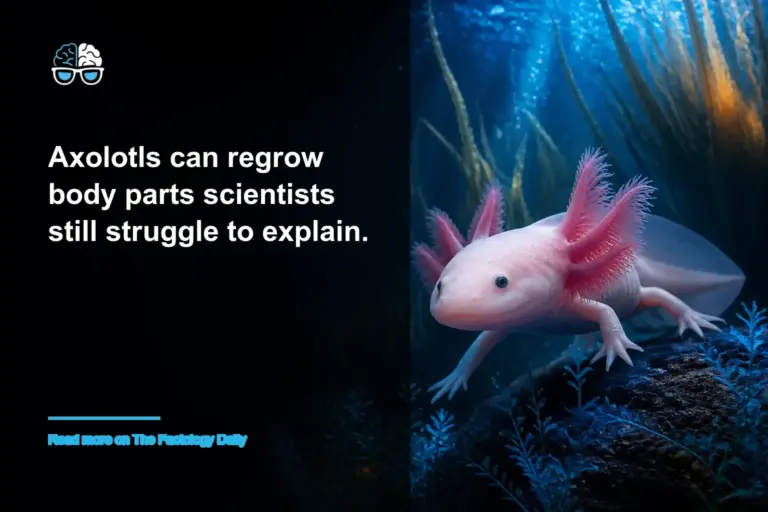
Axolotls can regrow body parts scientists still struggle to explain.
Axolotls retain larval features, regenerate limbs, and face critical endangerment due to habitat loss and invasive species in Mexico's highland lakes.
Overview
The axolotl (Ambystoma mexicanum) is a mole salamander that remains aquatic throughout its life, retaining larval features such as external gills and a caudal fin. It reaches sexual maturity without undergoing metamorphosis, a condition known as neoteny. Axolotls are noted for their ability to regenerate lost limbs, parts of the eye and heart, and even portions of the brain. Wild populations are now restricted to the remnants of Lake Xochimilco in Mexico City and are classified as critically endangered.
Background
The name axolotl comes from Classical Nahuatl āxōlōtl, which has been translated in various ways including “water slave,” “water servant,” and “water twin.” The term refers to Xolotl, the Aztec god associated with fire, lightning, the dead, dogs, games, grotesque beings and twins. Some sources prefer the label “Mexican axolotl” to distinguish this species from unmetamorphosed individuals of other Ambystoma species.
Historically, axolotls inhabited a network of wetlands and lakes in the Mexican highlands, including Xochimilco, Chalco and the presumed larger lakes of Texcoco and Zumpango. Drainage of these water bodies, begun by the Aztecs and intensified during the twentieth century, has reduced their habitat to the canals of Lake Xochimilco. Surveys recorded densities of 6,000 individuals per km² in 1998, 1,000 per km² in 2003 and 100 per km² in 2008. A four‑month search in 2013 found no wild specimens, but two were observed a month later in canals linked to Xochimilco.
Key details
Adult axolotls measure 15–45 cm in length, with a typical size near 23 cm; individuals exceeding 30 cm are uncommon. They possess wide heads, lidless eyes and underdeveloped limbs bearing long, thin digits. Three pairs of external gill stalks (rami) protrude behind the head, each lined with filaments (fimbriae) that increase surface area for gas exchange. Four internal gill slits, hidden beneath the external gills, are lined with gill rakers that prevent food from entering while allowing particles to filter. Males display swollen cloacae lined with papillae; females become noticeably wider when gravid and full of eggs.
The wild type shows a brown‑tan base with gold speckles and an olive undertone; color can shift slightly by altering melanophore thickness for camouflage. Four pigmentation genes generate common mutant varieties: leucistic (pale pink body, black eyes), xanthic (grey body, black eyes), albino (pink or white body, red eyes) and melanistic (black or dark blue body lacking speckles and olive tone). Variability in speckle size and frequency can produce piebald patterns. The axolotl genome, published in 2018, contains about 32 billion base pairs—roughly ten times the size of the human genome—but encodes a comparable number of proteins (≈23,251 versus ~20,000 in humans). The excess DNA consists largely of repetitive sequences, which also inflate median intron lengths to 22,759 bp, far exceeding those of humans, mice and Tibetan frogs.
Regeneration is the axolotl’s most studied trait. Lost limbs, tails, parts of the eye and heart, and even non‑vital brain regions can regrow over months without forming scar tissue. Successful regeneration requires a wound epithelium, nerve signals and cells from the different axial lines of the limb; a blastema forms from proliferating wound‑epidermis cells before patterning the new structure. The apical ectodermal ridge (AER) and its cap (AEC) initiate limb outgrowth in embryos, and in axolotls the AEC can signal through growth hormones to activate blastema cells. Axolotls exhibit indeterminate growth, continuing to increase in size throughout life, which supports their regenerative capacity, although this ability wanes with age but does not vanish entirely. Metamorphosed individuals show a markedly reduced capacity to regrow limbs.
Neoteny describes the axolotl’s retention of larval traits into reproductive adulthood. Unlike most amphibians, axolotls lack the thyroid‑stimulating hormone that would trigger thyroxine production and metamorphosis; consequently they keep their external gills and remain fully aquatic. Laboratory axolotls have been induced to metamorphose by administering thyroid hormones such as thyroxine or triiodo‑L‑thyronine. Thyroxine tends to accelerate metamorphosis while suppressing regeneration, whereas triiodo‑L‑thyronine can promote regenerative effects without completing metamorphosis. After hormone‑induced metamorphosis, axolotls develop increased limb muscle tone, resorb gills and fins, grow eyelids, and lower skin permeability to better retain water on land; their lungs also mature further. In the absence of hormonal treatment, larval axolotls begin absorbing iodide into the thyroid around 30 days post‑fertilization, producing variable thyroid hormone levels, while adults show no detectable hormone unless metamorphosis is triggered.
Axolotls are carnivorous, locating prey by smell and sucking it into the stomach with a rapid snap. Their natural diet includes mollusks, worms, aquatic insects, arthropods such as crayfish, small fish and other salamanders, including conspecifics. Sexual maturity is reached at about 1.5 years of age, with a generation length of roughly 5.5 years. Wild individuals typically live between 10 and 15 years.
Why it matters
Scientists study axolotls to gain clues about healing processes, given their ability to regenerate limbs, parts of the eye and heart, and even portions of the brain without forming scar tissue. Research focuses on how wound epithelium formation, nerve signaling and blastema activation coordinate to rebuild complex structures.
Conservation concerns also highlight the species’ relevance. Wild axolotls are critically endangered, with populations reduced by habitat loss, invasive fish such as Nile tilapia and common carp, and water‑quality degradation from agricultural runoff and partially treated wastewater. Captive breeding programs, including a colony of 100 individuals at the National Autonomous University of Mexico’s Laboratory of Ecological Restoration (as of 2021), aim to preserve genetic diversity and test reintroduction viability. A 2025 study reported that released captive‑bred axolotls gained weight after release, indicating short‑term success, though ongoing threats from pollution, invasive species and urban expansion continue to challenge long‑term survival.
External References
For further reading, see the Wikipedia article on axolotls.
Sources