
The Moon Is Slowly Moving Away
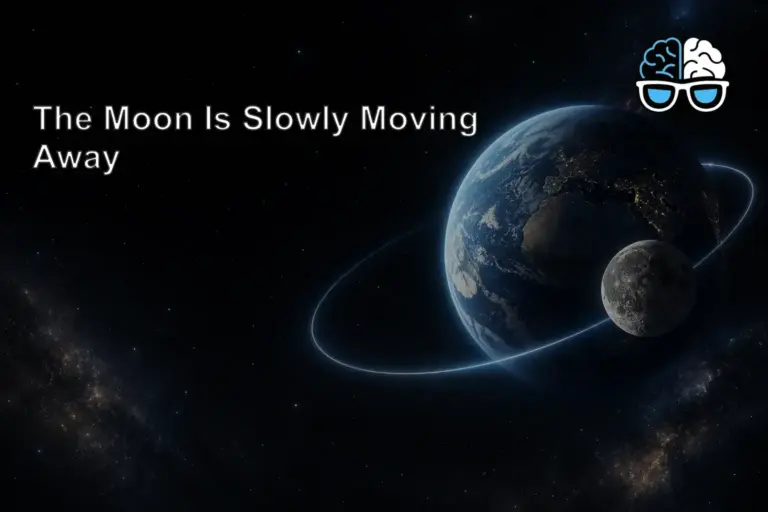
The Moon is slowly moving away from Earth due to tidal forces, a process affecting its orbit and Earth's rotation. Learn how lunar dynamics shape celestial
Overview
The Moon, Earth’s only natural satellite, follows a complex and dynamic orbit that is both stable and constantly evolving. Though it appears to circle Earth in a predictable path, the Moon’s motion is influenced by multiple gravitational forces, primarily from Earth and the Sun. This intricate dance results in a geocentric orbit that is not perfectly circular or fixed in orientation. The Moon completes one full revolution relative to the fixed stars in approximately 27.3 days, known as a sidereal month, while its cycle of phases—such as new moon to full moon—takes about 29.5 days, called a synodic month.
At an average distance of 384,400 kilometers from Earth’s center, the Moon orbits within a system where both Earth and Moon revolve around a shared center of mass called the barycenter. This barycenter lies about 4,670 kilometers from Earth’s center—roughly 73% of Earth’s radius—meaning it remains inside Earth despite the Moon’s significant mass. Over time, tidal interactions are gradually pushing the Moon farther from Earth, a process that will continue for billions of years.
Background
Human understanding of the Moon’s orbit has deep roots in ancient observation. Around 1000 BCE, Babylonian astronomers began systematically recording lunar events such as moonrises, moonsets, and the Moon’s passage near specific stars. These clay tablet records represent one of the earliest examples of data-driven prediction in human history. Though they lacked geometric models, the Babylonians identified key periodicities in lunar motion, including the synodic, anomalistic, and draconic months, and used them to construct long-term lunar calendars.
Later, Greek astronomers like Ptolemy developed geometric models using epicycles and evection to explain the Moon’s apparent irregularities. These models were refined over centuries, culminating in Isaac Newton’s formulation of universal gravitation, which provided the first complete physical theory of lunar motion. The Moon’s orbit became known as the oldest three-body problem in astronomy, due to the complex gravitational interplay between Earth, Moon, and Sun.
From a heliocentric perspective, the Moon does not orbit Earth in isolation. Instead, it follows a path around the Sun that is always convex—never looping backward—because its orbital speed around Earth (about 1.022 km/s) is small compared to Earth’s heliocentric velocity (about 30 km/s). This means the Moon’s trajectory never curves away from the Sun, even as it swings around Earth.
Key details
The Moon’s orbit is elliptical, with an eccentricity of 0.0549. This causes its distance from Earth to vary between 363,300 km (perigee) and 405,507 km (apogee)—a difference of about 11.6%. When a full moon occurs near perigee, it appears larger and brighter, known as a supermoon. The apparent size of the Moon can vary by up to 12%, and its visible area by 25%, affecting the amount of sunlight it reflects toward Earth.
The orientation of the Moon’s orbit changes over time. The major axis of its elliptical path—connecting perigee and apogee—rotates eastward in a process called apsidal precession, completing a full cycle every 8.85 years. Simultaneously, the line of nodes—the points where the Moon’s orbit crosses the ecliptic plane—moves westward, completing a retrograde cycle every 18.6 years. This nodal precession governs the timing of eclipses, which can only occur when the Moon is near a node during a new or full moon.
The Moon’s orbital plane is inclined at about 5.145° to the ecliptic, the plane of Earth’s orbit around the Sun. This inclination is significantly smaller than the Moon’s angle to Earth’s equator, which varies over an 18.6-year cycle due to nodal precession. At maximum inclination—known as a major lunar standstill—the Moon’s declination can reach ±28°36′, while at minimum (minor lunar standstill), it reaches ±18°20′. These variations affect how often and where the Moon rises and sets at different latitudes.
At the lunar poles, the Sun remains above the horizon for about 173 days, followed by a similar period of darkness. This is due to the Moon’s axial tilt of 6.688° relative to its orbital plane, combined with the precession of its rotational axis, which keeps the angle between the ecliptic and lunar equator nearly constant at 1.543°. This results in a phenomenon called libration in latitude, where different parts of the Moon’s surface become visible over time.
Why it matters
The Moon’s orbital dynamics have profound implications for Earth’s tides, climate, and long-term stability. Tidal forces between Earth and Moon transfer angular momentum, slowing Earth’s rotation and gradually increasing the Moon’s orbital distance. This process, known as tidal acceleration, is responsible for the Moon’s slow retreat—about 3.8 centimeters per year—measured precisely using laser reflectors left on the lunar surface by Apollo missions.
Understanding the Moon’s orbit has also advanced scientific methodology. The Babylonians’ use of observational data to predict future events laid the groundwork for empirical science. Later, Newton’s laws of motion and gravitation were tested against lunar observations, proving their validity and enabling accurate predictions of eclipses and planetary positions.
Modern instruments like the Antikythera mechanism—dating to 150–80 BCE—demonstrate early attempts to model celestial mechanics with mechanical precision. Though such complexity did not reappear until the 14th century, the principles behind these devices reflect a deep historical commitment to understanding the cosmos through measurement and calculation.
External References
Sources