Tag: human behavior

The facts behind Cognitive load.
In cognitive psychology, cognitive load is the effort being used in the working memory.

What people get wrong about Mental rotation.
Mental rotation is the ability to rotate mental representations of two-dimensional and three-dimensional objects as it is related to the visual representation of such rotation within the human…

Eidetic memory deserves a closer look.
Eidetic memory, also known as photographic memory and total recall, is the ability to recall an image from memory with high precision—at least for a brief period of…

The sourced background on Working memory.
Working memory is a cognitive system with a limited capacity that can hold information temporarily.
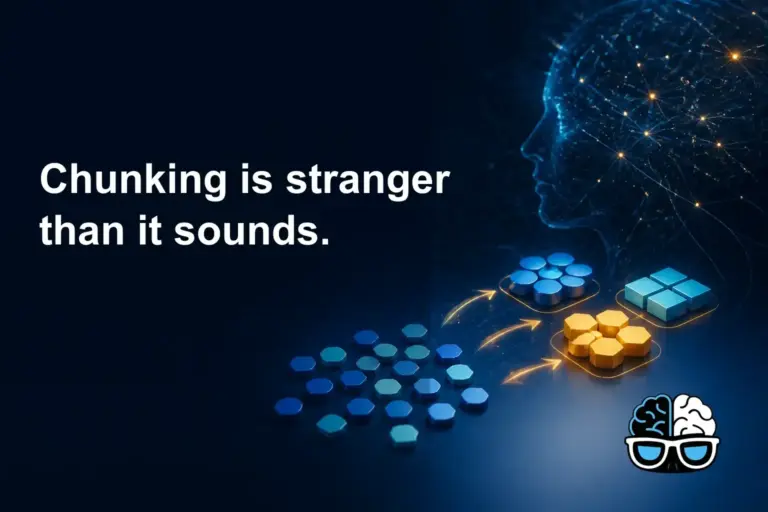
Chunking is stranger than it sounds.
In cognitive psychology, chunking is a process by which small individual pieces of a set of information are bound together to create a meaningful whole later on in…

What people get wrong about Neuroplasticity.
Neuroplasticity, also known as neural plasticity or just plasticity, is the medium of neural networks in the brain to change through growth and reorganization.

The simple version of Reward system.
The reward system is a group of neural structures responsible for incentive salience, associative learning, and positively-valenced emotions, particularly ones involving pleasure as a core component.
What people get wrong about Dopamine.
Dopamine is a neuromodulatory molecule that plays several important roles in cells.

The surprising truth about Circadian rhythm.
A circadian rhythm, or circadian cycle, is a natural oscillation that repeats roughly every 24 hours.

Why Microsleep still gets people talking.
A microsleep is a sudden temporary episode of sleep or drowsiness which may last for a few seconds where an individual fails to respond to some arbitrary sensory…