
The real story behind Earthquake light.
An earthquake light, also known as earthquake lightning or an earthquake flash, is a reported luminous phenomenon associated with tectonic stress, seismic activity, or volcanic eruptions.
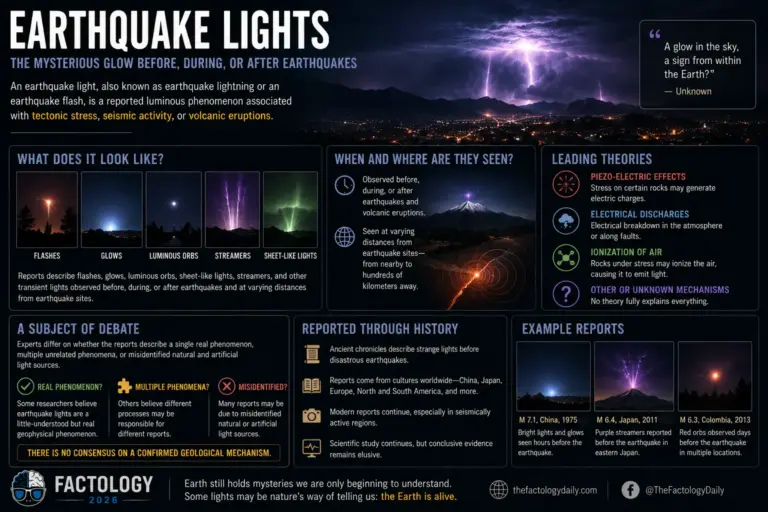
An earthquake light, also known as earthquake lightning or an earthquake flash, is a reported luminous phenomenon associated with tectonic stress, seismic activity, or volcanic eruptions.
An earthquake light, also known as earthquake lightning or an earthquake flash, is a reported luminous phenomenon associated with tectonic stress, seismic activity, or volcanic eruptions. Reports describe flashes, glows, luminous orbs, sheet-like lights, streamers, and other transient lights observed before, during, or after earthquakes and at varying distances from earthquake sites. Experts differ on whether the reports describe a single real phenomenon, multiple unrelated phenomena, or misidentified natural and artificial light sources, and there is no consensus on a confirmed geological mechanism. Some authors use the term more narrowly for lights reported close in time to seismic events, rather than for unexplained lights merely observed near faults or in earthquake-prone regions.
Sources