Category: Psychology

Actor–observer asymmetry is not quite what it seems.
Actor–observer asymmetry is a bias one exhibits when forming attributions about the behavior of others or themselves.

Why Halo effect still gets people talking.
The halo effect, a term coined by Edward Thorndike, is the tendency for positive impressions of a person, company, country, brand, or product in one area to positively…
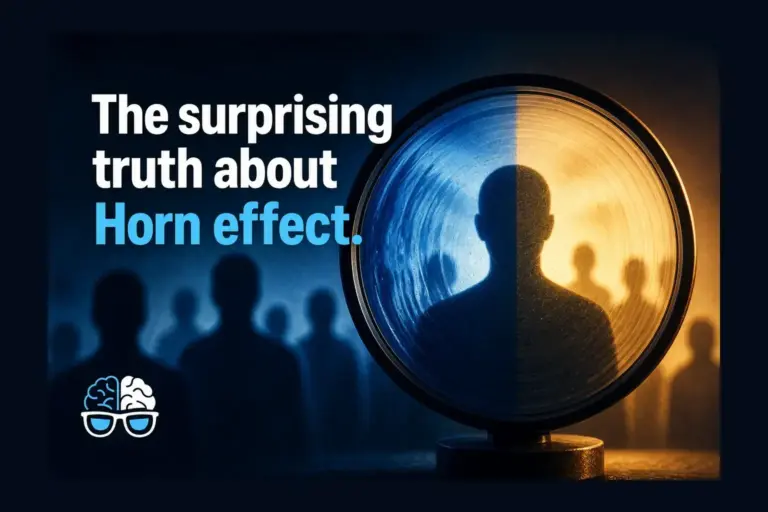
The surprising truth about Horn effect.
The horn effect, closely related to the halo effect, is a form of cognitive bias that causes one's perception of another to be unduly influenced by a single…

The real story behind Ben Franklin effect.
The Ben Franklin Effect is a psychological phenomenon in which a person likes someone more after doing them a favor.

What people get wrong about Pratfall effect.
In social psychology, the pratfall effect is the tendency for a person's likability to change after making a mistake depending on perceived competence: highly competent individuals tend to…

Door-in-the-face technique deserves a closer look.
The door-in-the-face technique is a compliance method commonly studied in social psychology.

Why Foot-in-the-door technique still gets people talking.
Foot-in-the-door (FITD) technique is a compliance tactic that aims at getting a person to agree to a large request by having them agree to a modest request first.

Social proof is stranger than it sounds.
Social proof is a psychological and social phenomenon wherein people copy the actions of others in choosing how to behave in a given situation.

Pluralistic ignorance still raises strange questions.
In social psychology, pluralistic ignorance is a phenomenon in which people mistakenly believe that others predominantly hold an opinion different from their own.

The surprising truth about Diffusion of responsibility.
Diffusion of responsibility is a sociopsychological phenomenon whereby a person is less likely to take responsibility for action or inaction when other bystanders or witnesses are present.